We earn a commission if you buy through our links, at no extra cost to you.
Best Dehumidifier for a Basement: Pints, Pumps & Drains
How to pick a dehumidifier for a basement: sizing in pints per day, pump versus drain hose, cold-room limits and three models that fit, with maker specs.
At a glance
For a basement, size by pints per day, not square footage, and choose how the water leaves. The Midea Cube 50-Pint with Pump and the hOmeLabs 50-Pint with Pump suit rooms where gravity cannot reach a drain, and the AprilAire E080W is a larger, professionally installed unit.
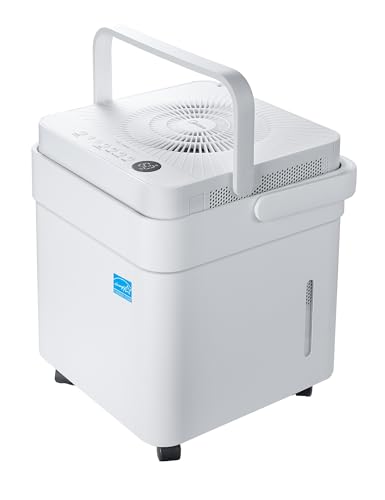

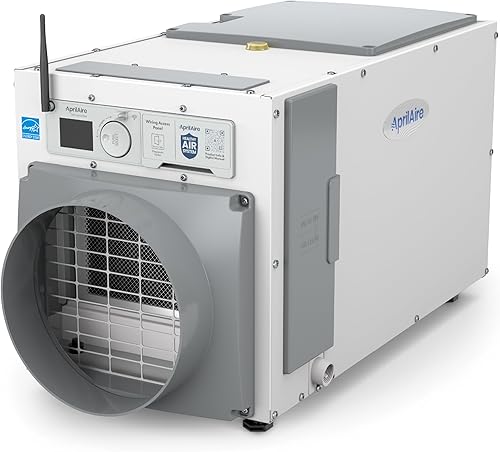
A basement is the most common reason people buy a dehumidifier, and the one where buyers make the most expensive mistakes. They trust the square footage on the box, pick a unit with a bucket and then carry gallons of water up the stairs every few days. This guide walks through sizing, drainage and cold-weather limits using ENERGY STAR and EPA guidance and the makers’ own pages, then points to three models on our site that fit a basement. We compare published specs and say plainly where a maker leaves a number out. For a full ranking across the whole site, see our main dehumidifier ranking.
Start With the Water, Not the Machine
EPA says moisture control is the key to controlling mold, and that a leak has to be fixed and not just dried around. A dehumidifier helps keep relative humidity in the range EPA suggests, but it will not repair a cracked wall or a gutter that dumps water at the foundation. ENERGY STAR lists simple measures that reduce the load: extend downspouts away from the foundation, keep gutters clear, make sure soil slopes away from the house, vent the clothes dryer outdoors and use bathroom and kitchen fans. Do those first, then size the machine.
Sizing: Pints per Day Beat Square Feet
ENERGY STAR sizes portable units in pints removed per 24 hours and gives a chart. For a small-to-medium space under 2,000 sq ft:
- Slightly to moderately damp (musty smell that comes and goes, 50 to 75 percent relative humidity): 20 to 30 pints per day.
- Very damp (the space always smells damp, damp spots on walls and floors, 75 to 90 percent): 25 to 40.
- Wet (walls or floor sweat, seepage, or laundry drying adds load, 90 to 100 percent): 30 to 50.
For a large room over 2,000 sq ft the same bands are 30 or more, 40 or more and 50 or more. ENERGY STAR adds that if you are replacing a unit, you can judge by how much water you empty each day, and that it is better to oversize than to undersize.
About “70-pint” labels. Capacity labels changed because the DOE now tests at cooler, more basement-like conditions, and ENERGY STAR says these lower ratings started appearing in early 2020. Its rough conversion table puts an old 70-pint rating at about 50 pints today. Compare current ratings with current ratings, and check the test condition: hOmeLabs, for example, lists 50 pints per day at 80 degrees F and 60 percent relative humidity and a much bigger 120-pint figure at 95 degrees F and 90 percent. The first is the one to plan with.
About square footage. Coverage claims are marketing. The hOmeLabs page says up to 7,500 sq ft for a 50-pint unit, and Midea’s page lists both 4,500 and 1,500 sq ft for the Cube 50-Pint with Pump. Ceiling height, leaks, laundry and open doors change the load far more than floor area does. Use pints per day and how damp the room is.
Drainage: Bucket, Hose or Pump
Most portable units use a removable bucket with an automatic shutoff when it is full. ENERGY STAR notes that some come with a fitting for a hose that runs to a floor drain or sump pump, so there is nothing to empty. In a basement you almost always want that, because a unit working hard fills a bucket in hours. The question is which way the water has to go.
- Floor drain or sump nearby and lower than the unit: a gravity hose is enough, and any model with a hose fitting works.
- Nothing lower than the unit, or the nearest sink or window is higher: you need a built-in pump. Gravity only works downhill.
- A long run: keep the hose short. ENERGY STAR warns against a long, unwieldy hose that becomes a tripping hazard, and says never to set up drainage near electrical circuits or devices.
If a pump needs a new outlet, a new circuit or any change in wiring, have a licensed electrician do it. We do not give installation steps.
Cold Basements
ENERGY STAR says that if the space is typically below 65 degrees F, you may want a unit specified for lower temperatures, because frost can form on the condensing coils and make a compressor cycle on and off without removing moisture. Some units have anti-frost sensors. In a finished, heated basement this is not an issue. In an unfinished basement in a cold climate, check it first, and look for the maker’s operating range. AlorAir publishes one for its HD55S, starting at 33.8 degrees F. Midea and hOmeLabs do not publish a range for their 50-pint portables, so read the manual before putting one in a basement that gets near freezing.
Humidity Target
EPA says to keep indoor humidity below 60 percent, ideally between 30 and 50 percent. ENERGY STAR gives 30 to 50 percent as generally optimal, with 30 to 40 percent in cold climates during the heating season to prevent window condensation. All ENERGY STAR dehumidifiers have a built-in humidistat for setting the target. If yours does not show relative humidity, hang a hygrometer near it.
Older Units and Recalls
If you are replacing an old dehumidifier, check its model number before you plug it back in. In August 2023 the CPSC announced a recall of about 1.56 million Gree-made dehumidifiers sold under brands including Kenmore, GE, SoleusAir, Norpole and Seabreeze, because they can overheat, smoke and catch fire; the remedy was to stop using and unplug the unit and ask for a refund from Gree (CPSC, August 2023). In August 2021 the CPSC announced a recall of about 2 million New Widetech-made units sold under many brand names, with a pro-rated refund (CPSC, August 2021). Both pages list the model numbers. These recalls concern older units, so owners of an older dehumidifier should look up the model number on each page.
The Three Picks
These are the models on our site that suit a basement, chosen by drainage and size.
Midea Cube 50-Pint with Pump — For a Mid-Size Basement With No Drain in Reach
Midea lists 50 pints per day with a built-in pump for draining out a window or into a sink, plus app control and a nested or extended tank.
According to Midea, model MAD50PS1QWT removes 50 pints per day, has a built-in pump for continuous drainage out of a window or into a sink, and comes with a hose that can also drain by gravity to a sink or floor drain. The lift-and-twist body has a nested form for storage and an extended form with a larger tank, on four wheels with a handle. It connects to the SmartHome app and voice assistants. It weighs 41.54 lbs.
It is the compact choice if your basement has no floor drain but does have a window or a utility sink. The weak points are the thin spec sheet (no noise, pump lift or operating temperature range) and a 1-year warranty. If your basement is cold, check the manual first. Details are in the Midea Cube 50-Pint with Pump profile.
hOmeLabs 50-Pint with Pump and Wi-Fi — For Laundry Corners and Utility Sinks
hOmeLabs lists 50 pints per day, a built-in pump, Wi-Fi control, a 1.6-gallon tank and a washable filter.
hOmeLabs lists up to 50 pints per day at 80 degrees F and 60 percent relative humidity, a 1.6-gallon removable tank with a full-tank alert, and three ways to get water out: the bucket, a drain hose or the built-in pump. It adds Wi-Fi control, a timer, three modes and a washable filter, in an 11 by 15.4 by 24.3 inch body with wheels and a handle. ENERGY STAR puts laundry drying in its wettest band, and a pumped 50-pint unit is a reasonable fit for a laundry corner with a utility tub.
hOmeLabs publishes no pump lift, no decibel figure and no operating temperature range on the pages we read, and it lists a 1-year warranty. Read the hOmeLabs 50-Pint with Pump and Wi-Fi profile before you buy, and judge it by its 50 pints per day, not by the 7,500 sq ft on the box.
AprilAire E080W — For a Large Basement or a Whole-House Setup
AprilAire lists 80 pints per day for crawl spaces, basements and whole houses up to 4,400 sq ft, with Wi-Fi and a 6-year warranty.
The E080W is a different kind of machine. AprilAire lists 80 pints per day, ENERGY STAR Most Efficient 2025, built-in Wi-Fi and the Healthy Air App, a washable MERV 8 filter and a 6-year warranty (5-year full replacement plus 1 year on parts). It is a fixed unit, not a portable, and it can be ducted into the home’s air system in several ways. Ducted installs and the electrical supply are work for a licensed HVAC contractor or electrician. It drains through a barbed fitting and the page describes no built-in pump, so you need a drain lower than the unit or a plan for condensate from your installer.
It makes sense for a large basement or a very damp one where a portable cannot keep up, and for an owner who wants it out of sight. It is overkill for a single finished room. See the AprilAire E080W profile.
If the Space Is Closer to a Crawl Space
Two other units on our site are fixed, drain-only models built for crawl spaces that also list basements. The AprilAire E070 is listed at up to 70 pints per day for whole houses up to 2,200 sq ft, with no water tray and a recommended professional install. The AlorAir Sentinel HD55S is a compact 41.7 lb unit that AlorAir lists at 55 pints per day at AHAM, with automatic defrost and an operating range from 33.8 degrees F, which is useful in a cold basement. For small units, see our small dehumidifier ranking.
Quick Decision Guide
- Finished basement, floor drain nearby: a 40- to 50-pint unit with a hose fitting will do.
- Finished basement, no floor drain: a 50-pint model with a pump, such as the Midea or the hOmeLabs.
- Large, very damp or whole-house: the AprilAire E080W with a professional install.
- Cold, unfinished space: check the operating range first, and consider the AlorAir.
Placement Tips from ENERGY STAR
Close the doors and windows to the space while the unit runs. Keep the dehumidifier away from walls and furniture unless it has a top-mounted discharge, and away from sources of dust that could clog the coils. Connect it to a properly grounded outlet and follow the manual. Do not be alarmed if the air near the unit is slightly warmer, since removing moisture warms the space a little.
Sources
- ENERGY STAR: Dehumidifier Testing and Capacity
- ENERGY STAR dehumidifier buying guidance
- EPA: A Brief Guide to Mold, Moisture and Your Home
- CPSC: Gree recalls 1.56 million dehumidifiers (August 2023)
- CPSC: Two million dehumidifiers recalled, manufactured by New Widetech (August 2021)
- Midea 50 pt. Cube Dehumidifier with Pump official product page
- hOmeLabs 7,500 sq ft dehumidifier with pump and Wi-Fi official page
- AprilAire E080W official product page
- AprilAire E070 official product page
- AlorAir Sentinel HD55S official product page
Frequently asked questions
What size dehumidifier do I need for a basement?
ENERGY STAR suggests, for a room under 2,000 sq ft, 20 to 30 pints per day if it is slightly to moderately damp, 25 to 40 if it is very damp and 30 to 50 if it is wet or doubles as a laundry area. For a space over 2,000 sq ft it suggests 30 or more, 40 or more and 50 or more. ENERGY STAR also says it is better to oversize than undersize.
Do I need a dehumidifier with a pump for a basement?
Only if the water cannot run downhill to a floor drain, sump or sink. A hose draining by gravity needs the outlet to sit higher than the drain. If your only sink or window is above the unit, a built-in pump, such as the ones Midea and hOmeLabs list on their 50-pint models, solves it.
What humidity should I set in a basement?
EPA says to keep indoor humidity below 60 percent, ideally between 30 and 50 percent relative humidity. ENERGY STAR gives the same 30 to 50 percent range as generally optimal for a building. A hygrometer tells you whether the unit is reaching it.
Will a dehumidifier work in a cold basement?
It depends on the model. ENERGY STAR says frost can form on a compressor unit's coils when the air drops below 65 degrees F, which can make it cycle without removing moisture, and suggests a model specified for lower temperatures. AlorAir lists an operating range from 33.8 degrees F and automatic defrost for its HD55S. Midea and hOmeLabs publish no range for their 50-pint models.
How often do I have to empty a basement dehumidifier?
A bucket fills fast. hOmeLabs lists a 1.6-gallon tank, about 12.8 pints, on its 50-pint model, so a unit working at its full rating could fill it several times a day in a very wet space. That is why most basement owners use a hose or a pump.
Is a bigger basement dehumidifier always better?
Within reason. ENERGY STAR says to oversize rather than undersize, but a unit far above what the space needs adds cost and noise for little gain. Fixing the water source matters more: EPA says moisture control is the key to mold control.