We earn a commission if you buy through our links, at no extra cost to you.
Best Dehumidifier for a Crawl Space Under the House
Choosing a dehumidifier for a crawl space under the house: AHAM versus saturation pints, defrost, drainage and ducting, with three models built for it.
At a glance
A crawl space needs a fixed, drain-only dehumidifier, not a portable. The AprilAire E070 is listed at 70 pints per day with a recommended professional install. The AlorAir Sentinel HD55S is a compact unit with automatic defrost, and the AprilAire E080W is the larger, ductable choice.
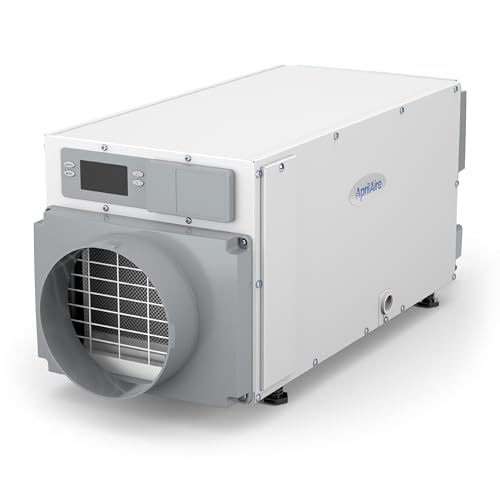

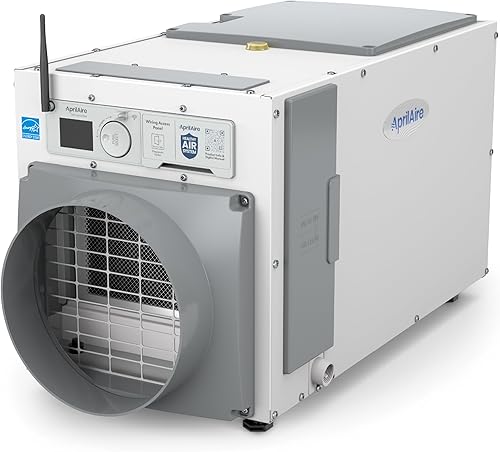
A crawl space is a hard place to dehumidify. It is low, it is hard to reach, and the moisture that builds up there rises into the house. The machines for this job are not the portable units you roll around a basement, and the numbers on their boxes are some of the most confusing in the category. This guide explains how to read those numbers and what to ask for, then points to three crawl space dehumidifiers on our site. Everything below comes from the makers’ pages, ENERGY STAR and EPA. If your problem is a basement and not a crawl space, read our basement dehumidifier guide, and for the full lineup see our main dehumidifier ranking.
Fix the Water First
EPA says moisture control is the key to controlling mold, and that a source of water has to be fixed and not just dried around. ENERGY STAR lists the basics that reduce the load around a foundation: extend downspouts away from the house, keep gutters clear, slope the soil away from the foundation and repair leaking outdoor faucets. A dehumidifier helps keep relative humidity in the range EPA suggests, below 60 percent and ideally 30 to 50 percent, but it cannot work on standing water or an open leak. Fix those first, or at least in parallel.
Why a Portable Unit Is the Wrong Tool Here
To be plain, a portable 50-pint dehumidifier is not made for the inside of a crawl space. It relies on a removable bucket, or a hose you have to route and keep from kinking, and it is designed to sit in a room you visit. In a crawl space you open a hatch, crawl in and out and may not look at the unit for weeks. A full bucket means a unit that shuts off and a space that goes damp. Our own portable picks, such as the hOmeLabs 50-Pint with Pump and Wi-Fi, are covered for basements and rooms, not for a crawl space.
Crawl space dehumidifiers are different. They have no water tray. They drain by hose or over a drain, they are built for low clearance and they often have features such as automatic defrost.
Reading the Pint Numbers
ENERGY STAR sizes portable units in pints per 24 hours and notes that capacity ratings have changed, because the DOE now tests at cooler, more basement-like conditions (the new ratings started appearing in early 2020). Crawl space units add another wrinkle: a maker may quote a lower standard figure and a much higher “at saturation” figure.
The AlorAir Sentinel HD55S shows it clearly. AlorAir lists 120 pints at saturation and 55 pints per day at AHAM, and the ENERGY STAR listing for the unit shows 36.33 pints per day, with annual energy use of 379 kWh. All three describe the same machine under different test conditions. The saturation number describes a warm, nearly saturated condition that a real crawl space seldom reaches. Plan with the lowest standardized figure, and treat the headline number as marketing. When you compare two models, make sure both ratings are the same kind. The AprilAire pages give a single figure, 70 pints for the E070 and 80 for the E080W, with no test condition named, so read those as the maker’s ratings and expect real output to depend on the temperature and humidity of your space.
ENERGY STAR also says it is better to oversize than undersize, and that you can judge the load by how much water you remove.
What to Look For
- Automatic defrost and a published operating range. Crawl spaces are cool. ENERGY STAR says frost can form on the coils below 65 degrees F and make a compressor cycle without removing moisture. AlorAir lists automatic defrost and an operating range from 33.8 degrees F for the HD55S.
- Drain-only design. No tank, a hose fitting and a drain that falls away from the unit.
- A body that fits. Height is the issue. The HD55S is 19.2 x 12.2 x 13.3 inches, the E070 is 12.5 x 12.5 x 25 inches, and the E080W is 15 x 14 x 26 inches.
- A filter you can reach. The E070 and E080W list washable MERV 8 filters. AlorAir’s HD55S includes MERV-1, with MERV-8 sold separately.
- A drain plan. Gravity needs a drain lower than the unit. If it does not exist, you need a condensate solution, and that is a job for a professional.
- Warranty. AprilAire lists 6 years for the E080W, AlorAir lists 6 years for its dehumidifiers (the first 2 years fully covered), and AprilAire’s E070 page does not publish a warranty term.
Install It With a Professional
Crawl space and ducted installs are not DIY jobs. AprilAire’s E070 page says “Professional install recommended,” and the E080W is sold through its network of Healthy Air Professionals. The E080W page lists several ducted layouts, such as main return to main return, a dedicated return to the main supply or A/C return, and ducted inlet and outlet grilles. Duct work, a new circuit, an outlet in the crawl space or a condensate pump should be done by a licensed HVAC contractor or licensed electrician. We do not give steps for any of it, and you should not improvise. ENERGY STAR makes the same point for whole-home units: hire a qualified contractor, and its guidance says duct sealing improves performance.
The Three Picks
AprilAire E070 — The Drain-Only Unit for a Sealed Crawl Space
AprilAire lists up to 70 pints per day for sealed crawl spaces, basements and homes up to 2,200 sq ft, with no water tray and a professional install recommended.
AprilAire’s page calls the E070 ideal for sealed crawl spaces. It lists up to 70 pints per day, a built-in digital control, a washable MERV 8 filter, corrosion-resistant aluminum coils and a 12.5 x 12.5 x 25 inch body. The unit starts on its own when humidity rises above your target, and drains through the included 10-foot tubing or over a floor drain. AprilAire points to 40 to 60 percent relative humidity.
The page does not publish a noise figure, a warranty term, Wi-Fi control or a weight, so we state none of them. It is the right size for a moderate crawl space. Read the AprilAire E070 profile for more.
AlorAir Sentinel HD55S — The Compact Unit for Low Clearance
AlorAir lists 55 pints per day at AHAM, automatic defrost, a compact body for low-clearance crawl spaces and an ENERGY STAR certification.
AlorAir says the HD55S has an updated, compact design for low-clearance crawl spaces and tight basements. It lists 55 pints per day at AHAM, 120 at saturation, a range from 33.8 to 104 degrees F, up to 50 dBA, gravity draining with a 6.56 ft hose, R32 refrigerant and 41.7 lbs. It is ENERGY STAR certified and sells hanging kits as an accessory. The page we read is for the Wi-Fi version, so do not assume app control on the standard model; ENERGY STAR lists the standard HD55S as not connected capable.
At up to 50 dBA it is a unit for a space you do not live above. Ask your installer where the unit will sit relative to the living space above, since a compressor hum can carry. See the AlorAir Sentinel HD55S profile.
AprilAire E080W — The Large, Ductable Choice
AprilAire lists 80 pints per day for crawl spaces, basements and whole houses up to 4,400 sq ft, with ENERGY STAR Most Efficient 2025 and Wi-Fi.
The E080W is AprilAire’s larger unit and the biggest on our site. AprilAire lists 80 pints per day, Wi-Fi and Bluetooth pairing with the Healthy Air App, ENERGY STAR Most Efficient 2025, a washable MERV 8 filter, insulation that AprilAire says dampens operating sound (no decibel figure is given), a 6-year warranty and several ducted layouts. In a crawl space you rarely open, app alerts are the practical benefit. It is far more capacity than a small space needs, so choose it for a large crawl space or when it will serve more of the house. See the AprilAire E080W profile.
Quick Decision Guide
- Moderate crawl space, professional install, drain nearby: AprilAire E070.
- Tight clearance or a cold space, gravity drain: AlorAir Sentinel HD55S.
- Large crawl space or ducted whole-house setup, with alerts on your phone: AprilAire E080W.
- A basement and not a crawl space: see the basement guide.
Before You Buy
Measure first. A hygrometer reading taken over a few days tells you the real humidity before and after. Ask your contractor what test condition any pint figure is based on, how the water will leave, where the filter will sit so you can reach it, and who services the unit. If an older dehumidifier is being replaced, check its model number on the CPSC recall pages; older units from many brands have been recalled.
Sources
- ENERGY STAR: Dehumidifier Testing and Capacity
- ENERGY STAR dehumidifier buying guidance
- EPA: A Brief Guide to Mold, Moisture and Your Home
- AprilAire E070 official product page
- AprilAire E080W official product page
- AlorAir Sentinel HD55S official product page
- ENERGY STAR certified product listing for the AlorAir Sentinel HD55S
Frequently asked questions
Can I use a regular portable dehumidifier in a crawl space?
We would not. A portable 50-pint unit depends on a bucket or a hose and was designed to sit in a room, not inside a low, dirt-floor space you rarely enter. Crawl space units such as the AprilAire E070 and E080W and the AlorAir HD55S are drain-only, with no tank to fill, and are built for the job.
What is the difference between AHAM and saturation pint ratings?
They are different test conditions. AlorAir, for example, lists 120 pints at saturation and 55 pints per day at AHAM for the Sentinel HD55S, and ENERGY STAR lists 36.33 pints per day for it. The saturation figure describes a warm, nearly saturated condition that most crawl spaces do not reach, so plan with the lowest standardized rating.
Do I need a pump for a crawl space dehumidifier?
Only if the water cannot run downhill to a drain, sump or a low spot outside. AlorAir lists gravity draining with a 6.56 ft hose for the HD55S, and AprilAire's E070 and E080W list a drain fitting and no pump. If you need a condensate pump, ask a licensed contractor or electrician, because adding one involves a power connection.
Can I install a crawl space dehumidifier myself?
AprilAire says on the E070 page that professional installation is recommended, and its E080W is sold through its network of Healthy Air Professionals. Ducting, new circuits and condensate pumps are work for a licensed HVAC contractor or electrician. We do not give installation steps.
What humidity should a crawl space have?
EPA says to keep indoor humidity below 60 percent, ideally between 30 and 50 percent, and that moisture control is the key to mold control. AprilAire suggests 40 to 60 percent for the E070. A hygrometer tells you what the space is actually at.
Will a dehumidifier fix a wet crawl space?
Not by itself. EPA says to fix the water source and dry water-damaged areas within 24 to 48 hours. A dehumidifier helps keep relative humidity in the range EPA suggests once the leak, the drainage or the standing water has been dealt with.