We earn a commission if you buy through our links, at no extra cost to you.
Best Dehumidifier for a Bedroom: Quiet & Small Options
How to pick a dehumidifier for a bedroom, apartment or dorm: published noise figures, bucket size, humidity targets and two Midea Cube models that fit.
At a glance
For a bedroom, choose a compressor dehumidifier sized in pints per day and check the maker's noise figure, since many publish none. The Midea Cube 20-Pint is rated at 20 pints per day for a bedroom or apartment. The Midea Cube 50-Pint with Pump suits a damp room that needs a pump.
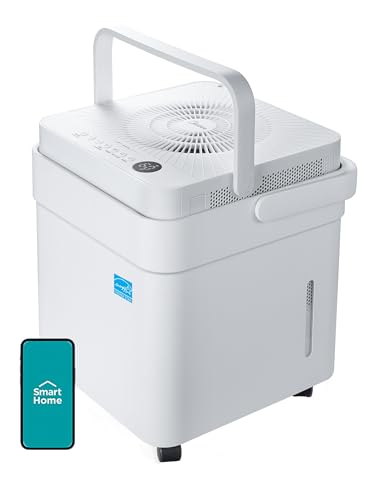
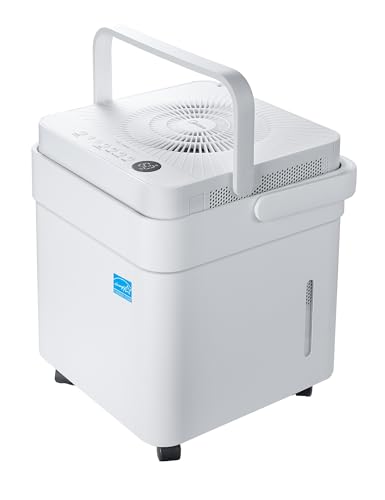
A damp bedroom is annoying in a way a basement is not: you sleep in it. Windows fog, clothes feel clammy and the closet smells musty, and the machine that fixes it will run through the night. That makes noise, bucket size and light the main questions. This guide covers how to size a bedroom dehumidifier, what noise figures the makers actually publish, and which of our models fit. We compare published specs, and we say so wherever a maker leaves a number out. For basements and large rooms, see our main dehumidifier ranking.
Do You Actually Need One?
EPA says to keep indoor humidity below 60 percent, ideally between 30 and 50 percent relative humidity, and says relative humidity can be read with an inexpensive moisture or humidity meter sold at many hardware stores. Buy a hygrometer first and watch it for a few days. ENERGY STAR also lists ways to cut the load: use vent fans in bathrooms and kitchens, vent a clothes dryer outdoors and dry laundry outside when you can. If the reading stays above 60 percent, a dehumidifier makes sense. A dehumidifier helps keep relative humidity in the range EPA suggests, but it will not fix a leak, and EPA says to dry water-damaged areas within 24 to 48 hours.
Sizing a Bedroom Unit
ENERGY STAR sizes portable dehumidifiers in pints per day. For a space under 2,000 sq ft, which includes any bedroom and most apartments, it suggests:
- 20 to 30 pints per day if it is slightly to moderately damp: a musty smell that comes and goes, 50 to 75 percent relative humidity.
- 25 to 40 if it is very damp, with damp spots on walls and floors.
- 30 to 50 if it is wet, or when laundry drying adds load.
A one-bedroom apartment of 700 or 1,000 sq ft is still in that under-2,000 sq ft band, and a unit moved from room to room covers it. ENERGY STAR says to oversize rather than undersize. The DOE test now runs at cooler conditions, and ENERGY STAR says the lower ratings started appearing in early 2020, which is why current labels show smaller pint numbers than older “70-pint” units did, so compare current ratings with current ratings. Do not trust square footage claims on the box. Midea’s page for the 20-pint unit says up to 1,500 sq ft, but ceiling height, a leak or a closet full of damp clothes change the load far more than floor area.
Noise: Only Published Figures
Noise is the number buyers want most and makers publish least. Here is what is published for the models on our site:
- Eva-Dry EDV-1100: about 33 dB, according to Eva-Dry. It is a 22-watt mini unit, not a room dehumidifier.
- AlorAir Sentinel HD55S: up to 50 dBA, according to AlorAir. It is a crawl space unit and not a bedroom one.
- Midea Cube 20-Pint and Cube 50-Pint with Pump: no decibel figure on Midea’s pages.
- hOmeLabs 50-Pint with Pump and Wi-Fi: no decibel figure on the pages we read. hOmeLabs calls it quiet, but a word is not a measurement.
- AprilAire E080W: AprilAire says its insulation dampens operating sound but publishes no dB figure.
The honest summary is that we cannot rank the Midea models for noise. A compressor dehumidifier makes a fan and compressor hum, and anything that cycles on and off can wake a light sleeper. If you are sensitive, consider where the unit sits, run it before bedtime to bring humidity down, use the humidistat to let it cycle and check the owner’s manual. Treat any maker figure as a rough guide, since measuring distance and fan mode vary.
Compressor or Thermoelectric?
A compressor unit, like the Midea Cubes, condenses water on a cold coil and is rated in pints per day. A thermoelectric (Peltier) mini unit uses a solid-state cooling plate. It has no compressor, so it is quiet and low-power, but it removes far less water, especially in cool air. Eva-Dry does not name the technology for the EDV-1100, but its 22-watt draw is consistent with a thermoelectric design. That is our inference, not a maker statement. For a whole bedroom, the capacity of a compressor unit is the safer choice. The Eva-Dry EDV-1100 is better used in a closet, a pantry or a camper, where its quiet shutoff-and-restart design fits. Our small dehumidifier ranking compares the small units.
Bucket, Hose or Pump
Most portable units have a removable tank with an automatic shutoff, as ENERGY STAR notes, and some take a hose to a drain. In a bedroom the bucket is the nightly chore: you empty it in the morning, and if it fills during the night the unit shuts off. Midea does not publish a tank volume for the Cube 20-Pint, so we cannot say how long a night will last. Its included hose lets you drain by gravity to a sink or floor drain, which only works if the outlet sits higher than the drain. A built-in pump, as on the Cube 50-Pint with Pump, can drain out a window or into a sink, but it is a bigger and heavier unit than most bedrooms need.
Dorm Rooms
A dorm room is small, so a 20-pint unit is plenty in size. Rules are another matter. Check with your housing office before you buy or plug in any appliance, since policies on appliances, outlets and power use vary by school and building. We do not know your school’s rules and will not guess at them. If a full-size dehumidifier is not allowed, ask what is.
Display Lights and Other Small Things
Many units have a display and indicator lights. Midea’s pages do not describe a display-off setting for these models, so if you are light-sensitive, check the manual or place the unit out of your line of sight. Keep the unit away from walls and curtains so air can circulate, as ENERGY STAR advises, close the windows and doors while it runs, and connect it to a properly grounded outlet. Keep drain hoses away from electrical cords.
The Picks
Midea Cube 20-Pint — The Right-Sized Choice for Most Bedrooms
Midea lists 20 pints per day, a compact 33.07 lb body on wheels, app control and a hose for gravity drainage.
Midea lists the Cube 20-Pint (model MAD20S1QWT) at 20 pints per day for spaces up to 1,500 sq ft. It is a lift-and-twist cube that works nested or extended, with four wheels, a built-in handle, a 13.5 by 13.5 inch footprint, SmartHome app and voice assistant control and a 1-year warranty. The pump is listed as No. Midea does not publish a noise figure, a tank volume or an operating temperature range, so we cannot tell you how loud it is or how long a night will fill the tank. For a bedroom or apartment that is clammy, it is the best match on our site: the 20-pint rating sits at the bottom of ENERGY STAR’s band for a space under 2,000 sq ft, and it moves from room to room. Read the Midea Cube 20-Pint profile.
Midea Cube 50-Pint with Pump — For a Very Damp or Below-Grade Bedroom
Midea lists 50 pints per day with a built-in pump for draining out a window or into a sink, in the same lift-and-twist body with app control.
This one is for a bedroom that is wet and not merely clammy: a below-grade bedroom with damp spots, or a room where laundry dries. Midea lists 50 pints per day, a built-in pump for continuous drainage out a window or into a sink, a hose for gravity draining and a 41.54 lb body. Its page lists no noise figure and a 1-year warranty. Fifty pints is more than most bedrooms need, and a bigger unit is a bigger hum, so choose it only if the room really is that damp. See the Midea Cube 50-Pint with Pump profile.
Quick Decision Guide
- Clammy bedroom or apartment: Midea Cube 20-Pint.
- Wet, below-grade bedroom with no drain in reach: Midea Cube 50-Pint with Pump.
- A closet in the bedroom: the Eva-Dry EDV-1100, or the cordless Eva-Dry E-333 if there is no outlet.
- A basement: see our basement guide.
Before You Buy
Check the model number on the listing so you get the 20-pint unit and not a pump model. If you are replacing an old unit, look up its model number on the CPSC recall pages first, since older dehumidifiers from many brands have been recalled. Plug a portable unit in only as its manual directs.
Sources
- ENERGY STAR: Dehumidifier Testing and Capacity
- ENERGY STAR dehumidifier buying guidance
- EPA: A Brief Guide to Mold, Moisture and Your Home
- Midea 20 pt. Cube Dehumidifier official product page
- Midea 50 pt. Cube Dehumidifier with Pump official product page
- Eva-Dry EDV-1100 official product page
- AlorAir Sentinel HD55S official product page
- AprilAire E080W official product page
- hOmeLabs 7,500 sq ft dehumidifier with pump and Wi-Fi official page
Frequently asked questions
What size dehumidifier do I need for a bedroom?
ENERGY STAR suggests 20 to 30 pints per day for a slightly to moderately damp space under 2,000 sq ft, and more if it is very damp or wet. A bedroom is well under 2,000 sq ft, so a 20-pint unit such as the Midea Cube 20-Pint is at the low end of the right band, and a damper room may call for more. ENERGY STAR says it is better to oversize than undersize.
How loud is a bedroom dehumidifier?
It depends on the model, and many makers do not publish a figure. Eva-Dry lists about 33 dB for the EDV-1100 mini unit, and AlorAir lists up to 50 dBA for its crawl space HD55S. Midea does not publish a decibel rating for the Cube 20-Pint or the Cube 50-Pint with Pump, so we cannot rank them for noise. Compressor units make a fan and compressor hum.
What humidity should I keep in a bedroom?
EPA says to keep indoor humidity below 60 percent, ideally between 30 and 50 percent relative humidity. ENERGY STAR calls 30 to 50 percent generally optimal, and 30 to 40 percent in cold climates during the heating season to prevent window condensation. A dehumidifier helps keep relative humidity in that range.
Can I use a dehumidifier in a dorm room?
Rules differ by school and housing type. Check with your housing office before you buy or plug anything in, since some residence halls limit appliances. We do not know your school's policy and will not guess at it.
How often will I need to empty it?
Midea does not publish a tank volume for the Cube 20-Pint, so we cannot give a number. A small room in humid weather may need emptying about once a day. Midea's included hose lets you drain by gravity to a sink or floor drain, and the Cube 50-Pint with Pump can drain out a window or into a sink.
Is a thermoelectric mini dehumidifier enough for a bedroom?
Probably not. The Eva-Dry EDV-1100 draws 22 watts and is rated for up to 1,100 cubic feet, but Eva-Dry publishes no pints-per-day rating, and this type of unit generally removes less water, especially in cool air. We treat it as a closet and small-space unit.